Three numbers run the whole genre
Every eat-and-grow game is built on the same three parameters, and once you can feel them you can tell within a minute whether a given title will hold you.
The size gate. A strict inequality: you consume things smaller than you and bounce off or die to things larger. It is binary, which is why these games need no combat system - there is no damage, only a comparison.
The growth curve. How much bigger one meal makes you. A steep early curve makes the first thirty seconds feel great and the midgame feel flat; a shallow one makes the opening a chore. Almost every design choice downstream is about hiding the flat part.
Map object tiering. The layout designer’s job is to keep exactly one tier above you visible at all times. That visible-but-inedible object is the entire motivation engine. When a growth game stops being fun, it is usually because the tiering broke and you can see nothing worth growing toward.
Where the four games here sit
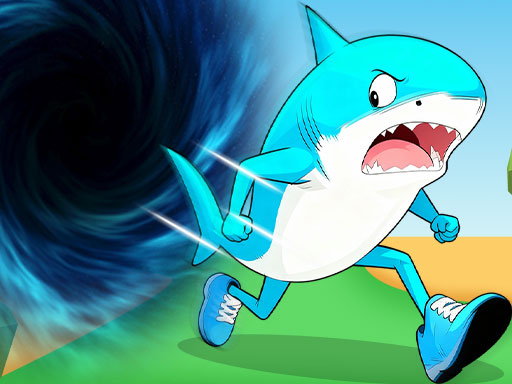
Brainrot World Hole.io is the purest statement of the format on this site. At 1334x750 you steer a growing hole around a map and collect anything smaller than your current radius, with mouse click or tap as the only input. Because there is no attack and no dodge, the size gate is doing one hundred percent of the work, and the meme cast is pure surface - the Italian brainrot characters are objects on the map, not mechanics. It is tagged with both hole and battlefield, and that second tag matters: rival holes exist, so the gate cuts both ways and a larger rival can take you off the board.
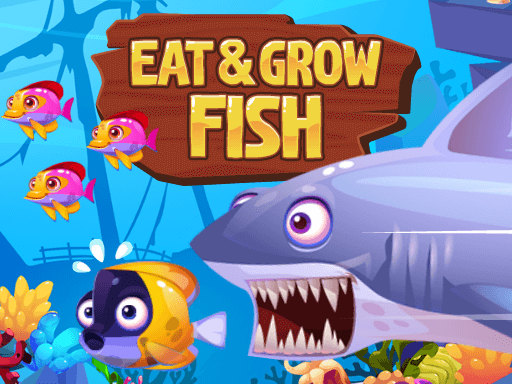
Eat And Grow Fish reframes the same inequality as a food chain at 800x600. You start as a tiny fish and eat upward, which is mechanically identical but psychologically different - a food chain implies a fixed ladder with a top, so the curve reads as progress toward a known goal rather than as an open score. It accepts WASD, arrow keys or the mouse, which is unusually permissive, and it ships a Duel Mode alongside Story Mode, so the size gate becomes a direct two-player contest. That is the version of the format where the flat midgame disappears entirely, because the thing one tier above you is another person.
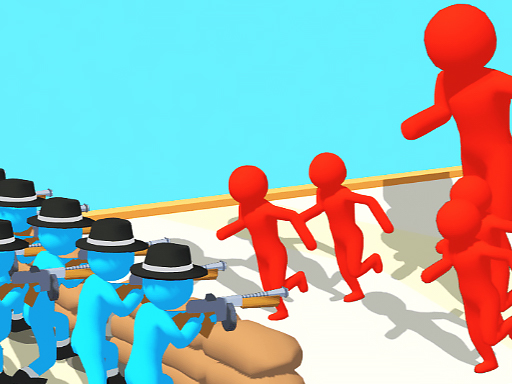
Crowd Evolution! adds a second gate on top of the first, and it changes the game more than it sounds like it should. At 800x600 you start as a single person and grow by running through a city gathering people of the same colour, absorbing smaller crowds while larger ones try to absorb you. Colour turns a size problem into a routing problem: the nearest crowd is frequently the wrong colour and therefore worthless, so you are constantly choosing between a short path to nothing and a long path across contested ground. There is also a timer - you have to be the biggest crowd before it expires - which converts the whole thing from a survival game into a throughput race. Control is swipe or mouse direction only.
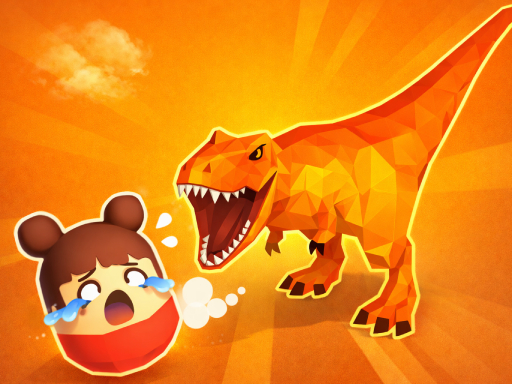
Dinosaur Rampage removes the predation risk altogether, and it is instructive to see what is left. It runs in portrait at 750x1334, attack is automatic, and mouse click or joystick only steers. Nothing on the map can eat you. Instead, when the rampage ends you are ranked against other dinosaurs in the same arena by destruction performance, and you unlock dinosaur types and shop skins over time. Strip out the risk and a growth game becomes a pure throughput game: the only question left is how efficiently you covered ground, which is why the leaderboard has to carry the tension the size gate used to.
Reading the curve yourself
Next time you start one of these, time how long it takes before you first see something you clearly cannot eat. If that happens in the first few seconds, the tiering is tight and the midgame will hold. If you spend a long opening stretch eating everything in sight with nothing looming, expect a plateau, and pick the variant with a rival instead - Hole.io’s competing holes, Crowd Evolution’s colour rivals, or Eat And Grow Fish’s Duel Mode.
More of this shelf is at /category/chaos/ and /category/survival/.