Two shelves that look further apart than they are
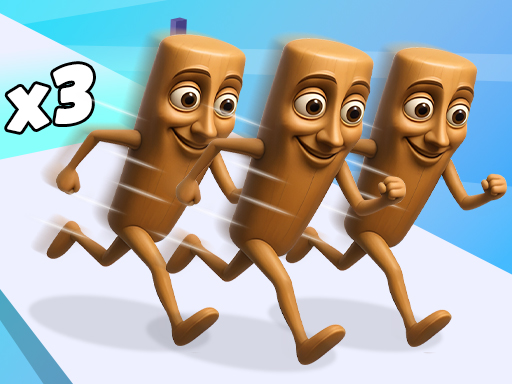
Put Brainrot Mob Clash 3D next to Bolts and Nuts - Sorting and they look like different hobbies. One is a 1334x750 dash through 3D obstacle courses dodging spikes and spinning saws while merging a stickman army; the other is an 800x600 board where you unscrew bolts in the correct sequence with single clicks. But the differences that actually matter are narrower and more specific than “chaotic versus calm,” and a couple of the ones people assume turn out to be false.
1. Failure penalty: run loss versus board loss
This is the big one. In Escape & Steal Brainrot: Sahur Hills failure costs you the entire run. You are collecting brainrot pages in a fog-covered forest with no weapon and the Sahur entity hunting you, and being caught ends the attempt - the pages, the route knowledge and the accumulated tension all reset at once. The game is tagged speedrun, which tells you this is intended: restarting is the loop.
In Bolts and Nuts a failure costs you the board, not the progression. The level index survives, the puzzle resets, and you re-attempt with information you did not have before. That single difference explains most of why one shelf feels stressful and the other does not. It is not the visuals.
2. Restart friction is nearly identical, and that surprises people
Both shelves restart fast. Neither Sahur Hills nor Bolts and Nuts puts a results screen, an ad gate or a menu between you and the next attempt. Browser games converge on near-zero restart friction regardless of genre, because the alternative is losing the player at the exact moment they were most engaged. If you assumed meme games restart faster, they do not - they just restart more often.
3. Screen noise density is real and measurable by counting
Brainrot Mob Clash 3D runs spikes, spinning saws, collectible brainrot characters, your own merging units and enemy mobs simultaneously, and asks you to track all five classes while moving. Bolts and Nuts shows a static arrangement of bolts and nuts that does not move until you touch it. That is a genuine perceptual load difference, and it is the reason the two feel differently tiring rather than differently difficult.
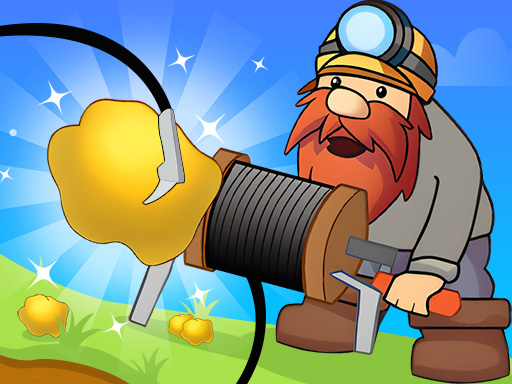
Gold Miner Classic sits in the middle and is instructive: the screen is quiet, but the claw is always swinging, so there is exactly one moving element demanding attention. One is enough to create timing pressure without creating noise.
4. Instruction depth tracks input complexity, not genre
Here is the assumption that breaks. You would expect the tidy games to come with careful instructions and the meme games to be inscrutable. The opposite is true on this site.
Sahur Hills ships a full control block - WASD or arrows to move, mouse to look, left click to collect, F for a hint - because it has four distinct inputs. Brainrot Mob Clash 3D and Gold Miner Classic both ship the identical one-liner “mouse click or tap to play,” despite sitting on opposite ends of the chaos axis, because both are single-input games. Meanwhile Bolts and Nuts carries the longest procedural explanation of the four: choose a bolt with a nut screwed onto it, click to unscrew and move it, and keep track of the order because sequence is the whole puzzle.
Instruction length is a function of how many keys you press. It says nothing about whether a game is orderly.
5. Where the difficulty is stored
The last difference is the most useful for picking what to play. Mob Clash stores difficulty in route and reaction - the course is the same, your line through it is not. Sahur Hills stores it in information - you get better because you learn where the pages and the entity are. Bolts and Nuts stores it in ordering, which is why it explicitly warns you about sequence. Gold Miner Classic stores it in timing against a quota, so the same board gets harder purely because the clock does.
Match that to what you have energy for. Reaction difficulty is bad after a long day; ordering difficulty is fine. Information difficulty is the best value if you intend to replay.
The chaotic shelf is at /category/meme/ and the orderly one at /category/brainrot/.